Water economies
Tourism, fisheries, drinking water, recreation, property, and public resources.
Nitrogen and phosphorus help grow the food that sustains us. After consumption, many of those nutrients end up in wastewater. When they remain in discharged water, they can contribute to uncontrolled blooms downstream. Second Atmosphere is developing Aeroponic Algal Culture (AAC) to grow attached algae where it can be controlled, measured, harvested, and put to work.
Nitrogen and phosphorus grow food. After consumption, nutrients not retained by people or animals enter wastewater. Treatment protects public health, but nutrients remaining in discharged water are still biologically active.
Nutrients support crops, animals, and biological production.
Unused nutrients enter wastewater and move through treatment.
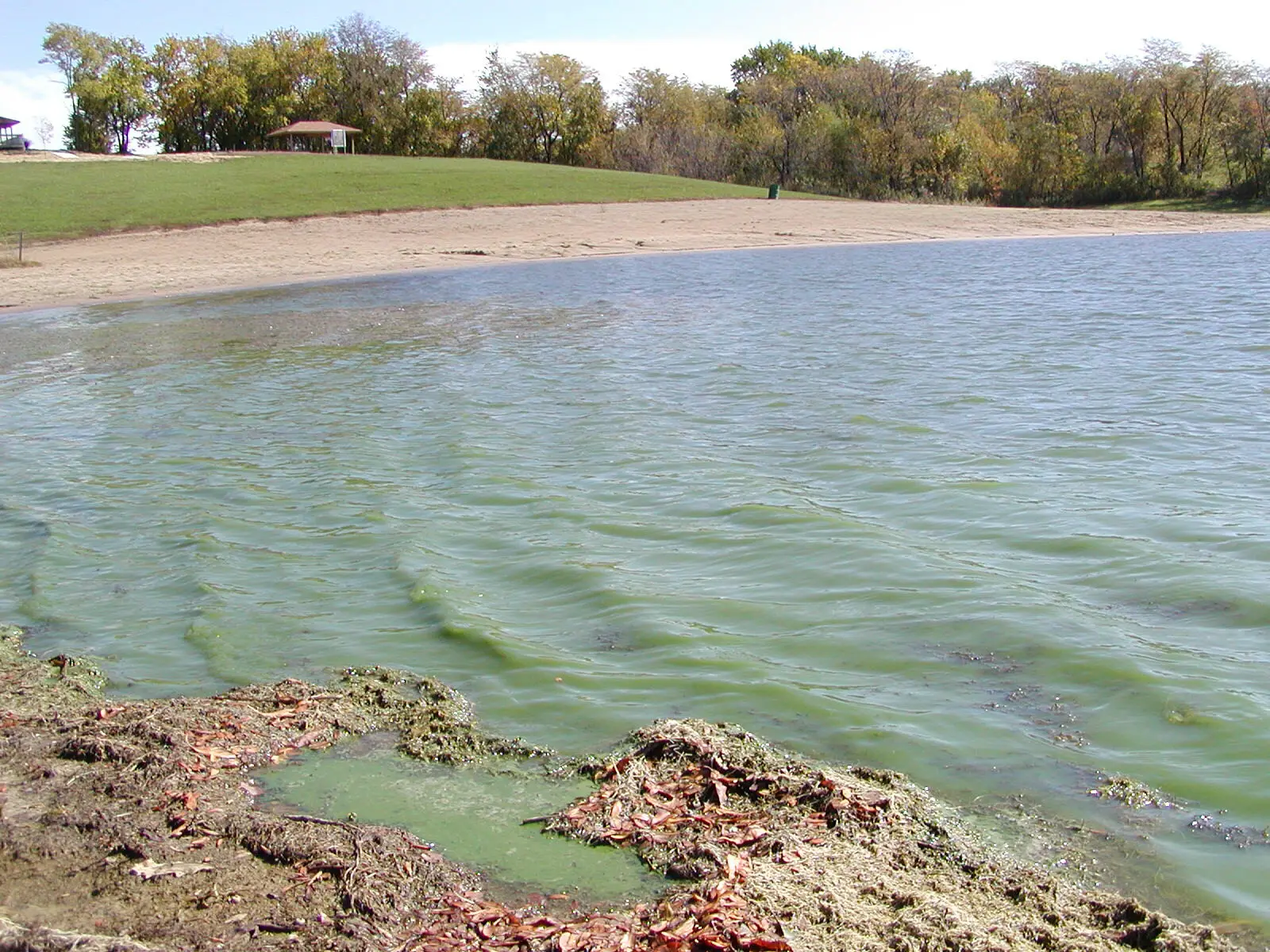
Remaining nutrients can support uncontrolled growth downstream.
AAC is designed to grow and harvest it under controlled conditions before those nutrients contribute to environmental and economic harm.
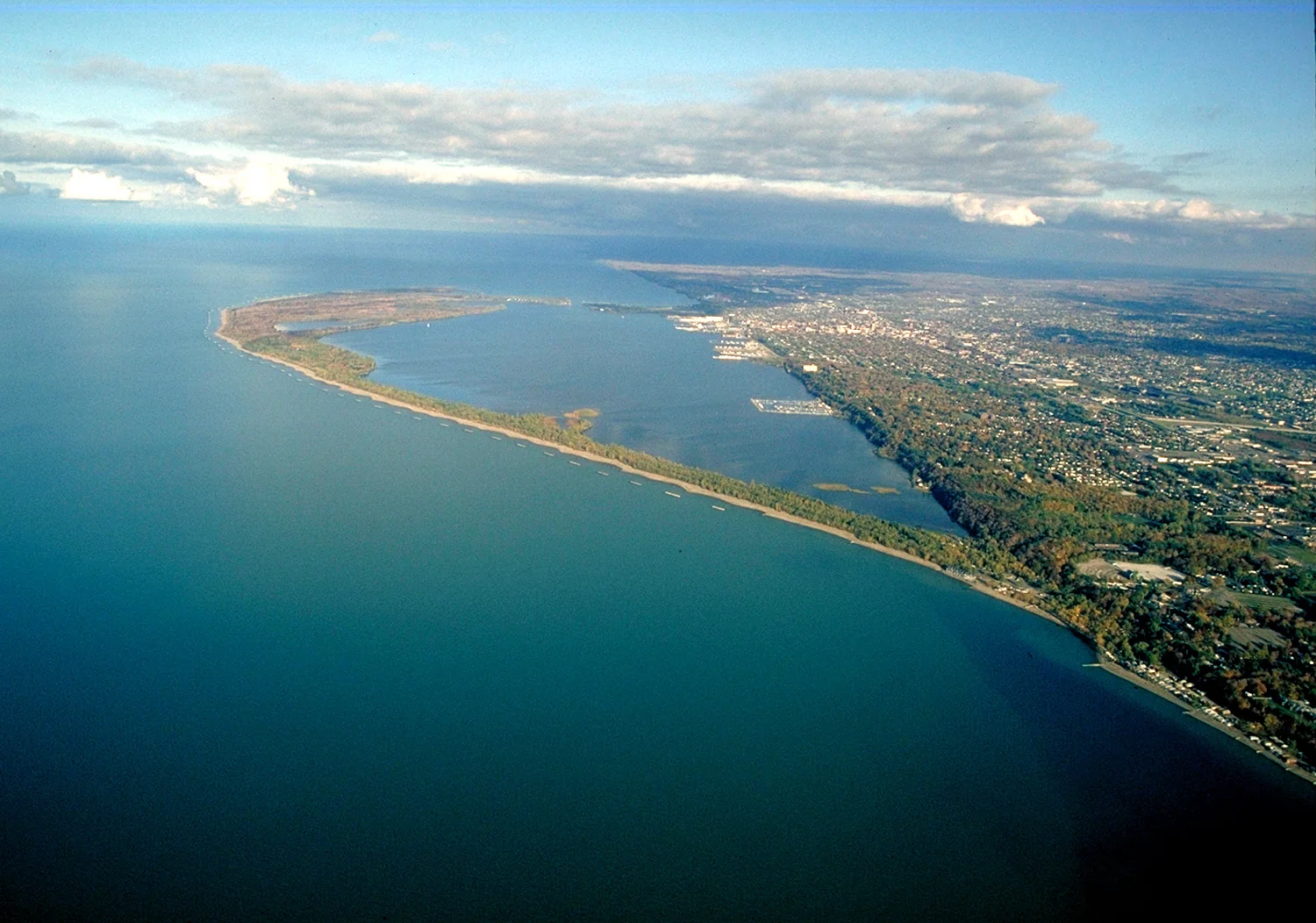
Drinking-water systems, fisheries, beaches, boating, tourism, waterfront businesses, property, municipal budgets, and regional identity all depend on healthier water.
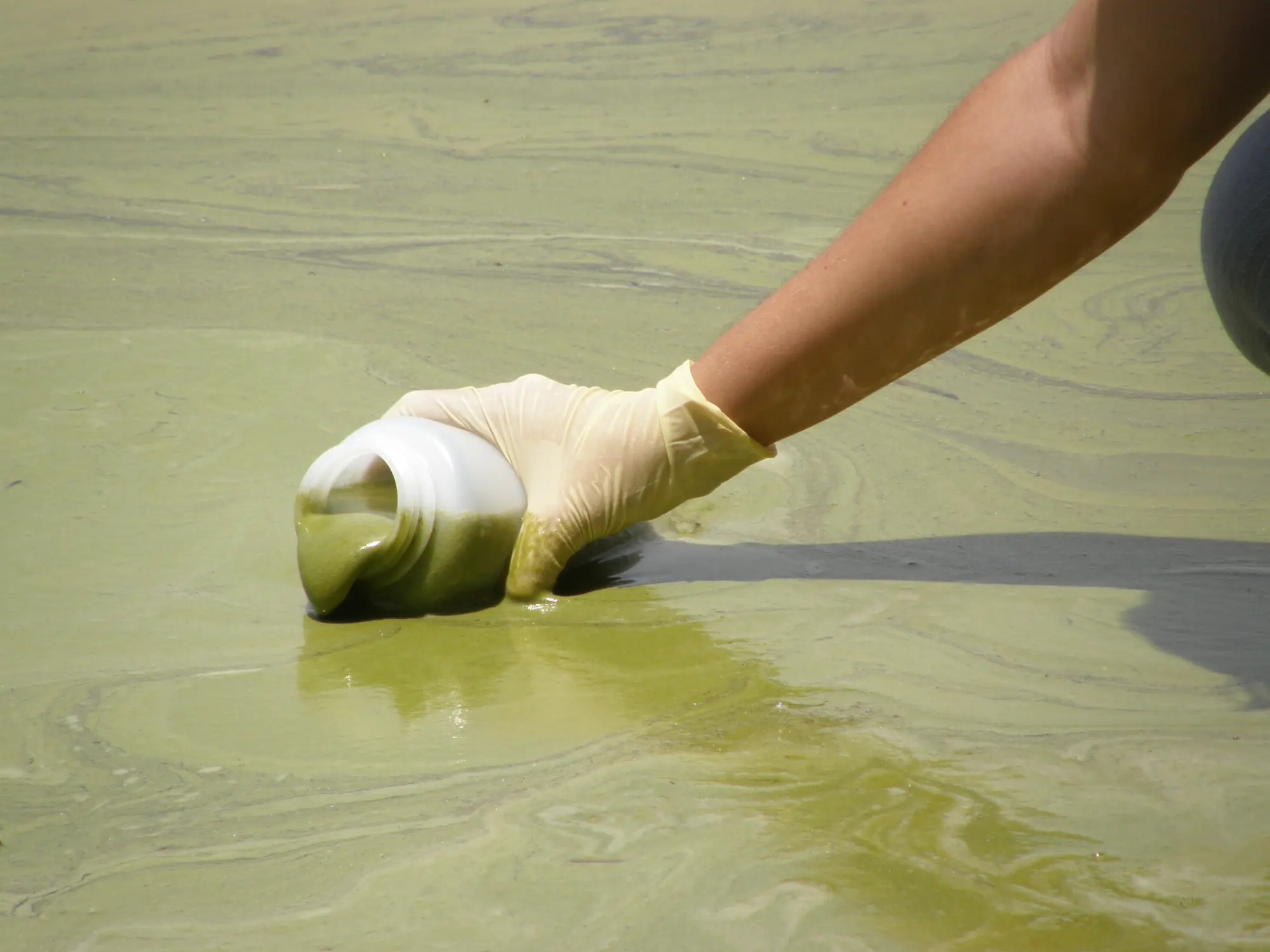
Suspended systems must deliver light and carbon through water, then separate microscopic biomass from that water. Earlier attached-growth systems demonstrated another path: grow algae on a surface.
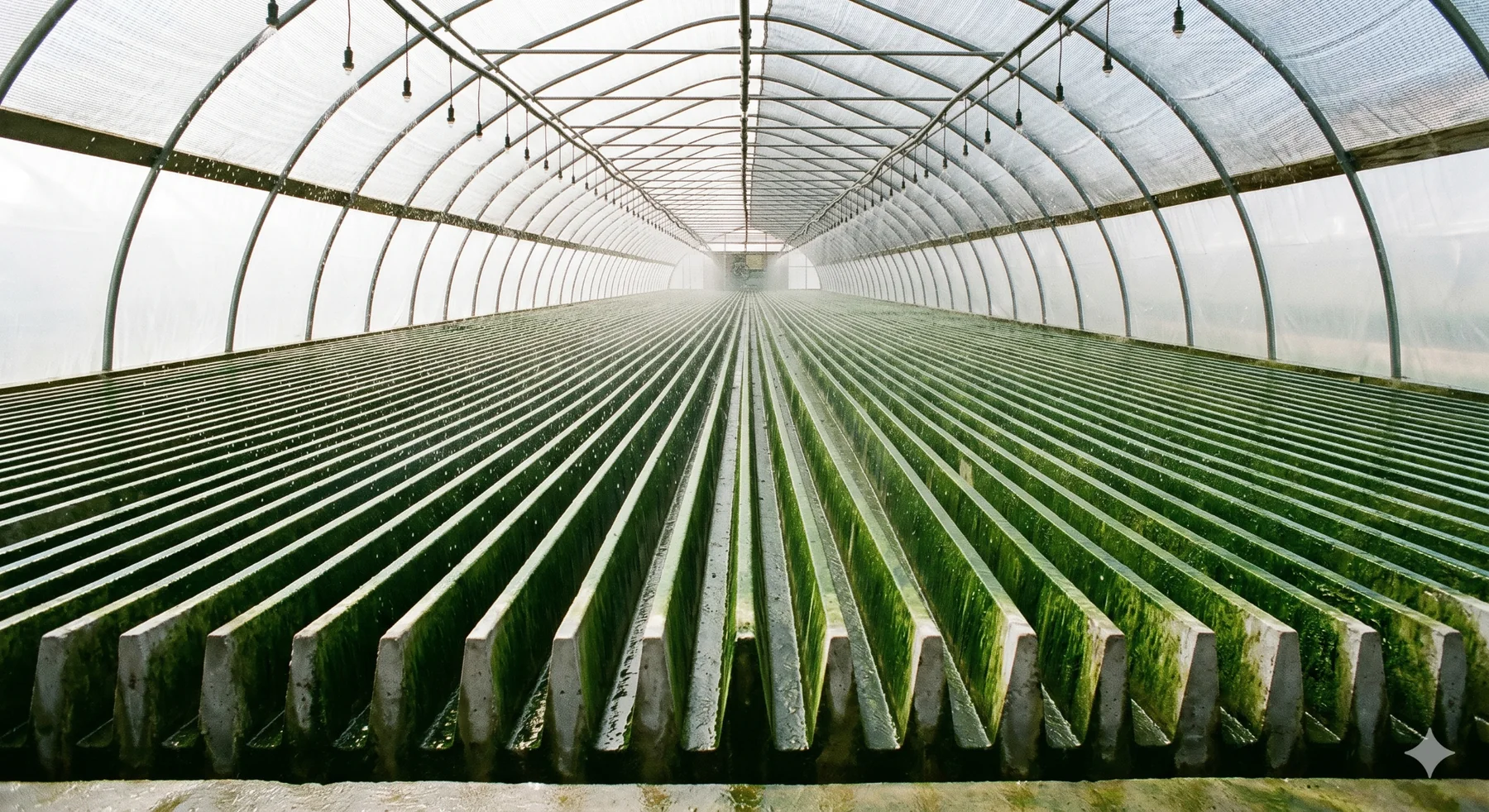
Aeroponic Algal Culture is designed to grow attached algae on fixed, exposed, rigid surfaces supplied with nutrient-bearing moisture. The Ridges increase growing surface and provide direct access for inspection and mechanical harvest.
Algae incorporate nitrogen and phosphorus into biomass. Harvesting physically carries those nutrients out of the water system.
Nutrient-rich waters form a vast distributed resource. Environomic value combines the environmental and economic value created by controlling pollution, protecting communities, recovering resources, and building infrastructure.
Tourism, fisheries, drinking water, recreation, property, and public resources.
Nitrogen, phosphorus, harvestable biomass, energy potential, and industrial feedstocks.
Materials, equipment, engineering, construction, processing, operations, and skilled work.
Treatment, development, systems, licensing, services, operations, biomass participation, and facility ventures.
One facility can solve a treatment problem while supporting a larger industrial system. The national calculation and complete value framework continue on The Opportunity page.
See the national opportunity →The biology was never the obstacle. The work now is to integrate algal growth, nutrient removal, rigid surfaces, water delivery, harvesting, controls, operations, and economics into repeatable infrastructure.
Research supports wastewater nutrient uptake, attached biofilms, and physical nutrient removal through harvest.
Work beginning at the Erie Wastewater Treatment Facility in 2007 shaped the practical infrastructure thesis through hands-on work with algae, wastewater, and equipment.
Hosts, researchers, suppliers, builders, operators, and capital partners can help create the first facilities.
Bring a nutrient challenge, host a pilot, test the biology, engineer a facility, supply materials, or help finance a new category of water infrastructure.